In light of what I've learned at game night last week on Friday October 25th, I realized that I could keep my crabs alive but they were not threatening enough on their own to finish the game.
Some low hanging fruit would be to increase my deck's landfall triggers. Thus, I built a test deck that leans into landfall and includes some of my favorite green cards. In an effort to investigate offense, this deck is 100% offensive and doesn't attempt to disrupt the opponent in any way.
Deck 1 is very amusing to play, but I found that it take 5 turns to kill the opponent, even with no slots dedicated to disrupting the opponent.
I also found that there were some situations where I would prefer to have Savor the Moment, rather than Flow of Ideas. I also wonder if something more offensive like Forced Fruition would work better.
My conclusion is that this deck neither gurantee a faster win, nor does it have any way of interacting with my opponent. I don't like it.
If Deck 1 doesn't kill quickly, what does?
Here is a sequence of play that mills 48 cards in 3 turns using 6 mana, which is about 3 cards too few.
Would any of the cards in Deck 1 speed this process up?
Cool! We can effectively mill our opponent to death in 2 turns, given enough cards that double the effectiveness of a single crab.
Here is another sequence that mills 54, but it is a pipe dream as there is no way for me to draw 11 cards by turn 2.:
What can we learn from these sequences? One take away is that a mix of lands, crabs, and enchantments can swifty win the game.
What if we built a deck that only includes efficient mill kill combo cards with the remainder of the deck full of efficient can trips to find relevant cards. Then we would build something like deck 2.
I fishbowl tested Deck 2 several times. I enjoyed playing with it and found that it routinely won the game on turn 3 or 4. I believe that this is the most consistent, fastest mill killing deck that I've ever created.
This deck relies on 16 cantrips, including a playset each of Once Upon a Time, Ponder, Brainstorm, and Preordain. After constructing this deck I remembered that I do not yet have a strong understanding of how the cantrips influence the deck's performance, so I wrote a computer simulation that represents my first ever attempt at developing my understanding of cantrips.
Here is a copy of my python program that I wrote to investigate the probabilities of finding specific cards and lands in a deck that does or doesn't contain cantrips: Link.
Here is a copy of the data I generated on 11.4.2024. Link.
The data has not been organized yet, but it includes the probability of finding 1 of 4 or 1 of 8 target cards in a deck given the presence of various cantrips and tutors and the probability of hitting land drops with various combinations of lands and cantrips.
One major results is that I calculate evidence in support of xerox theory, which states that every high quality cantrip, such as Ponder, can count as half a land when deciding how many lands to put into a deck. I found that I could hit my first 3 land drops with 80% confidene if I have 25 lands in my deck. If I play with 4 Ponders in my deck, then I can hit my first 3 land drops with 80% confidence with only 22 lands in my deck, which even better than the xerox theory prediction.
I hope that I can format this data soon and present it to you more fully. Till then I'll leave you in rapt anticipation.
I worked on my rasterizer this week. Once its further along, I plan on using it to help me generate sophisticated graphs for this blog.
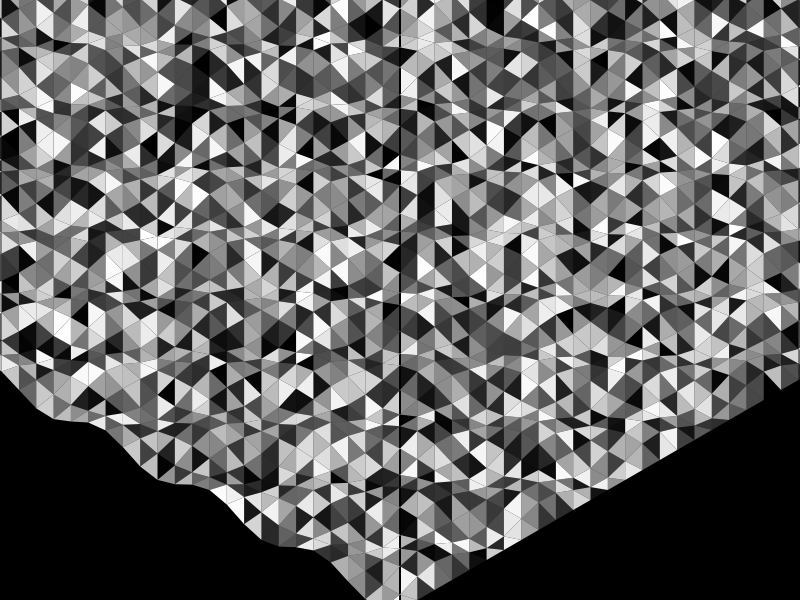
Before working on it, my rasterizer could achieve a simple isometric projection of 3d triangles, with a vertical mistake in the middle of the image. Every triangle was rendered with flat shading, making it hard for the 3d structure of the geometry to be interpretted correctly without more sophisticated lighting.
Here is an image depicting the state of my raterizer before I worked on it this past week:
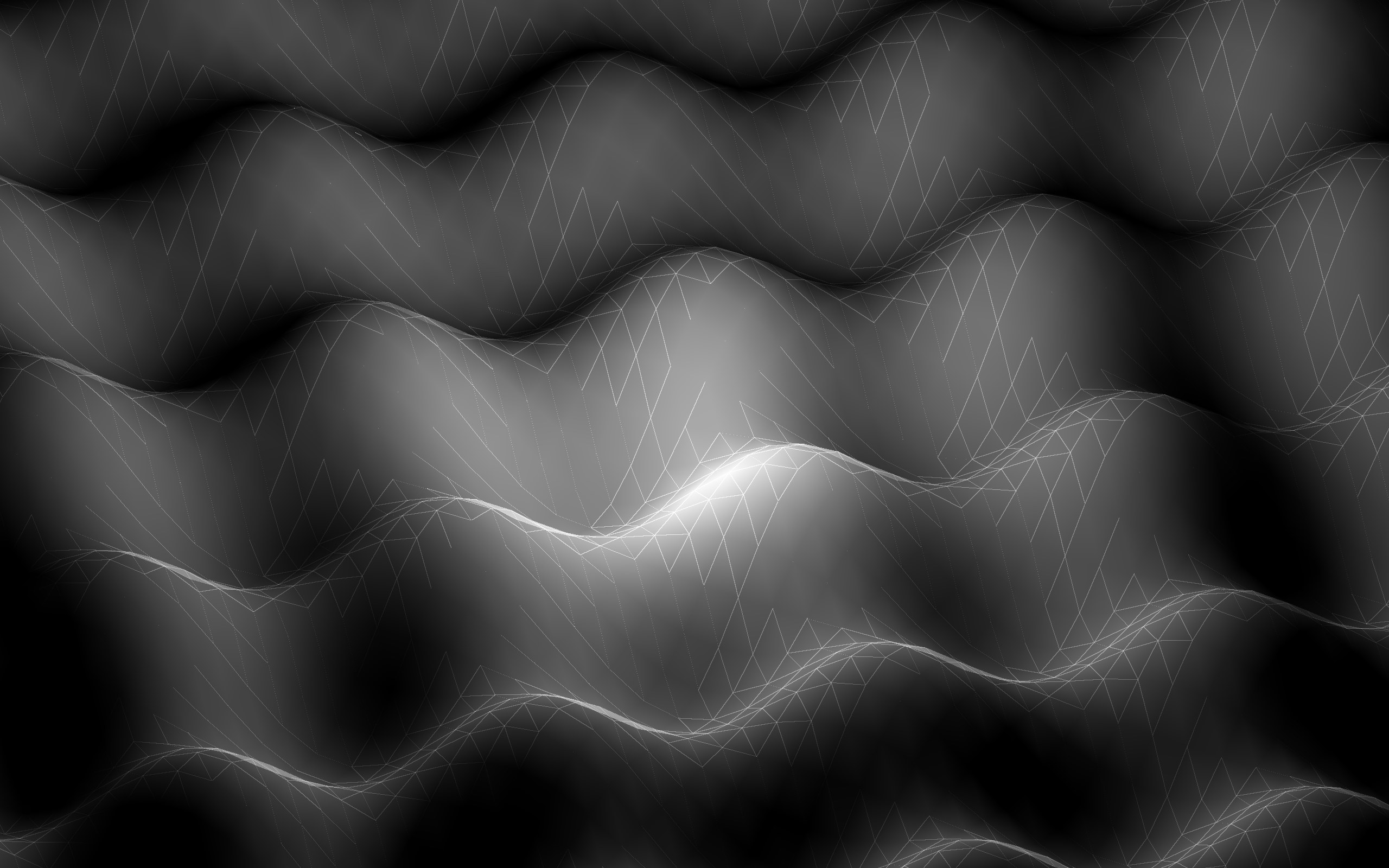
This week I worked to introduce some simple direct illumination. I was also able to introduce various affine transformations. I didn't fix the vertical bug, but it vanishes when the entire scene is rotated by even a negligible amount. I haven't yet solved the problem of rendering neighboring triangle edges correctly. I want to render cheap anti aliased triangles that seemlessly join together when rendered next to each other.
Here is an image rendered by my rasterizer after I got some work done on it this week:
Here are some action items I've like to accomplish and some ponderings that I may wish to investigate for next week (11.11.2024) or beyond.